
What Side of a Tree Does Moss Grow On and Why

- February 13, 2026
- By Michael Woods
So, you’re wondering, what side of the tree does moss grow on? It’s a common question, and the simple answer is: it depends. While there’s a popular idea that moss exclusively favors one direction, the reality is a bit more nuanced. Think of it less like a strict rule and more like a general tendency.
In the Northern Hemisphere, you’ll often find moss thriving on the north side of trees. Why? Because this side typically receives less direct sunlight. This means it stays cooler and retains moisture better, which is exactly what moss loves. Mosses are pretty basic plants; they don’t have roots to suck up water from the ground like bigger plants do. Instead, they absorb moisture right from the air and from rain or dew that lands on them. They also need water to reproduce, and drying out on a sunny side of a tree makes that pretty tough.
It’s easy to get caught up in the idea of moss as a natural compass, but relying on it solely can lead you astray. While it often prefers shadier, moister spots, these conditions aren’t exclusive to one side of a tree. Nature is full of exceptions, and moss growth is a prime example.
Moss can grow on any side of a tree, but it often appears on the north side in the Northern Hemisphere because that side stays shadier and holds moisture longer. Moss doesn’t follow strict compass rules — it grows wherever conditions are damp and shaded.
What Is Moss and How Does It Grow?
So, what exactly is this fuzzy green stuff we see clinging to trees, rocks, and even old walls? Moss isn’t really a plant in the way we usually think of them, like a rose bush or a blade of grass. It’s actually a type of bryophyte, which are really ancient, simple plants. They don’t have true roots, stems, or flowers like many other plants do. Instead, they have tiny, hair-like structures called rhizoids that help anchor them in place.
Moss needs a few key things to get going and keep growing. Think of it like this:
- Water is a must: Mosses are non-vascular, meaning they can’t transport water internally through a system of tubes. They absorb water directly from their surroundings, right through their leaves. This is why you’ll always find moss in damp places.
- Shade is their friend: Direct, harsh sunlight can dry moss out way too quickly, which is bad news for reproduction and survival. They prefer cooler, shaded spots where moisture can linger.
- A surface to hold onto: Mosses need something to grow on. Tree bark, with its nooks and crannies, is a fantastic place for moss spores to land and take root. They don’t actually feed on the tree; they just use it as a place to live, kind of like a tiny apartment building. This means they don’t harm the tree at all. In fact, mosses play a role in healthy forest ecosystems by helping to hold moisture in the soil and providing a habitat for tiny creatures.
Because they need these specific conditions – moisture and shade – moss tends to pop up in predictable places. It’s not magic, just a plant doing what it does best to survive and reproduce.
Why Does Moss Grow on Trees?
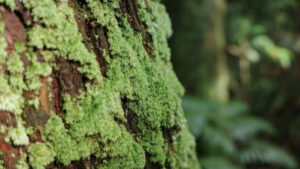
So, why do we see moss clinging to tree trunks and branches? It’s not because the tree is sick or because the moss is trying to take over. Really, trees just offer a convenient place for moss to hang out.
Moss needs a few things to get going, and trees happen to provide them. First off, moss needs moisture. Since moss doesn’t have true roots like other plants, it absorbs water directly from the air and any moisture that lands on it. Trees, especially those with rough bark, create little nooks and crannies. These spots are perfect for catching rainwater, dew, and fog, keeping the moss hydrated.
Think about it:
- Rough Surfaces: Tree bark, particularly on older trees, is often textured and uneven. This provides a stable surface for moss spores to land and get a grip. Smoother-barked trees, like beeches, tend to have less moss because there aren’t as many places for the spores to settle.
- Shade and Shelter: The trunk of a tree offers protection from direct sunlight. Moss prefers cooler, shadier spots, which helps prevent it from drying out too quickly.
- Vertical Real Estate: Tree trunks are like a skyscraper for moss. There’s not a lot of competition from other plants trying to grow on a vertical surface, giving moss a relatively clear space to establish itself.
It’s also worth noting that moss isn’t a parasite. It doesn’t steal nutrients or water from the tree. It just uses the tree as a place to live, like a tiny, green apartment building.
Mosses are ancient plants that have a simple way of getting water and nutrients – they absorb them directly from their surroundings. Trees offer a stable, often damp, and shaded environment that’s ideal for these little organisms to thrive without harming their host.
Why Moss Prefers Certain Sides of Trees
So, why does moss seem to pick favorites when it comes to tree sides? It really boils down to moisture and shade. Mosses are pretty simple plants, and they don’t have those fancy root systems that can go deep into the ground to find water. Instead, they have to soak up moisture right from the air, like from rain or fog.
This means they need a consistently damp spot to really thrive. Think about it: which side of a tree usually gets less direct sun? In the Northern Hemisphere, it’s typically the north side. Less sun means less drying out, so the bark stays cooler and holds onto moisture longer. It’s like a little microclimate perfect for moss.
But it’s not just about the north side. Moss can pop up anywhere conditions are just right. If a tree has really rough bark with lots of nooks and crannies, those little dips can trap water and provide shade, even on a sunnier side. Or maybe there’s a leaky branch above, or the tree is just naturally closer to a damp patch of ground. These spots create the damp, shady environment moss loves.
Here’s a quick rundown of what moss is looking for:
- Moisture: This is the big one. Moss needs water to survive and reproduce. Without it, they just can’t do their thing.
- Shade: Direct sunlight can dry moss out way too fast. Shady spots keep things cooler and damper.
- A Place to Hold On: Moss doesn’t have roots to anchor it. It uses tiny hair-like things called rhizoids to grip onto surfaces like tree bark.
Basically, moss is just looking for a cozy, damp, and shady spot to hang out. It’s not trying to be difficult; it’s just following its basic needs for survival and reproduction. The side of the tree that offers these conditions most consistently is the one that’s going to get the mossy treatment.
It’s also worth noting that the type of bark matters. Rough, textured bark, like on an oak tree, offers more places for moss spores to catch and grow compared to smooth bark, like on a beech tree. So, even if the sun exposure is the same, the bark’s texture can make a difference in where moss decides to settle down.
Does Moss Grow on the North Side of Trees?
So, does moss grow on the north side of trees? It’s a common idea, right? Like a little natural compass pointing the way. And, well, there’s some truth to it, but it’s not the whole story. Think of it more as a tendency than a hard and fast rule.
In the Northern Hemisphere, where we are, the north side of a tree generally gets less direct sunlight. This means it stays cooler and, more importantly, damper for longer periods. Moss really loves that. It’s a simple plant, and it doesn’t have roots like bigger plants to suck up water from the ground. Instead, it absorbs moisture right from the air and whatever lands on it – rain, dew, fog. So, a shady, moist spot is pretty much paradise for moss.
But here’s the kicker: moss isn’t picky about just the north side. If conditions are right, it can pop up anywhere. Imagine a tree with a really rough bark, full of nooks and crannies. Moss spores can settle in those little pockets and find enough moisture to get going, even if that side faces south or east. Or maybe there’s a leaky pipe nearby, or the ground around the tree is always a bit boggy. All these things can make other sides of the tree just as appealing to moss as the north side.
The idea that moss only grows on the north side of trees is a bit of a simplification. While it’s often true that the north side offers the best conditions in the Northern Hemisphere, moss will grow wherever it finds the right mix of shade and moisture. Relying on it as a foolproof navigation tool might lead you astray.
So, while you’ll often see more moss on the north side, don’t be surprised to find it thriving on other sides of the tree too, especially if the local environment is particularly damp or shady.
Does Hemisphere Change Moss Orientation?
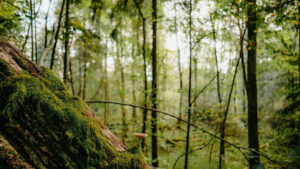
So, we’ve talked about how moss likes shady, damp spots. But does where you are on Earth, like if you’re up north or down south, mess with which side of the tree it prefers? The short answer is, yeah, it kinda does.
Think about it: the sun moves across the sky. In the Northern Hemisphere, the sun is generally in the southern part of the sky. This means the north side of a tree gets less direct sun, staying cooler and moister for longer. That’s prime real estate for moss. But flip that around to the Southern Hemisphere, and the sun’s path is mostly to the north. So, the south side of the tree becomes the shadier, damper spot that moss loves.
It’s not a hard and fast rule, though. Moss is pretty opportunistic. If a spot on the east or west side of a tree happens to be shady enough and gets enough moisture, moss might just decide to set up shop there too. Things like overhanging branches, nearby buildings, or even just the way the wind blows rain can create microclimates that moss takes advantage of.
Basically, while hemisphere plays a role in the general pattern, it’s the specific local conditions of shade and moisture that really call the shots for moss growth on any given tree.
Can You Really Use Moss to Find Direction?
So, you’ve heard the old saying: moss grows on the north side of trees, and you can use it to find your way. It’s a neat idea, right? Like a little natural compass built right into the forest. But here’s the thing – it’s mostly a myth, and relying on it could get you seriously turned around.
While it’s true that in the Northern Hemisphere, moss tends to favor the north side of trees, rocks, and other surfaces, it’s not a hard and fast rule. Why the north side? Simple: it gets less direct sunlight. This means it stays cooler and, more importantly, moister for longer periods. Moss, being a simple plant without a fancy root system, needs that consistent moisture to survive and reproduce. It just soaks up water from the air and rain.
However, moss isn’t picky about direction when the conditions are right. Think about it:
- Local Shade: A dense patch of trees, a nearby building, or even a large rock can create shade on any side of a tree.
- Prevailing Winds and Rain: If the wind consistently blows rain onto the east side of a tree, you might find moss growing there, regardless of the sun.
- Humidity Levels: In really humid environments, moss can thrive just about anywhere it can get a foothold.
- Surface Texture: Tree bark, with all its nooks and crannies, is a great place for moss spores to land and grow, no matter which way the tree is facing.
So, while you might see more moss on the north side of trees in places like the US or Europe, if you travel to the Southern Hemisphere, that pattern flips. The south side of trees there gets less sun and is therefore shadier and moister, making it the moss’s preferred spot. It’s all about the shade and moisture, not a universal directional marker.
The idea of moss as a reliable compass is a bit of a romantic notion. In reality, the plant’s growth is dictated by microclimates – tiny pockets of shade and moisture that can pop up on any side of a tree, influenced by a whole host of local factors. Trying to navigate solely based on moss could lead you astray.
In short, if you’re ever truly lost in the woods, it’s best to have a real compass, a map, or a GPS device. Moss is a fascinating plant that tells us a lot about its environment, but it’s not a foolproof directional guide.
Frequently Asked Questions
Why does moss like shady spots?
Mosses are pretty simple plants, and they need water to live and make more moss. They don’t have deep roots like other plants to search for water. Instead, they soak it up from the air and rain that lands on them. Direct sunlight can dry them out really fast, so they do best in shady places where the moisture sticks around longer.
Does moss grow differently in the Southern Hemisphere?
Yes, it does! In the Northern Hemisphere, the north side of a tree usually gets less sun, making it shadier and moister. But down in the Southern Hemisphere, the sun is mostly to the north. So, the south side of the trees gets less direct sun and tends to be the shadier, damper spot where moss likes to grow.
Can you use moss to find your way in the woods?
While the idea of moss as a natural compass is popular, it’s not very reliable. Because moss can grow on any side of a tree where it’s damp and shady, it’s easy to get confused. Factors like how much sun a specific spot gets, wind, or even nearby objects can affect where moss grows. It’s best not to count on it for navigation.
What makes tree bark good for moss?
Tree bark is like a cozy apartment building for moss! It’s usually rough and has lots of tiny cracks and bumps. These little nooks and crannies are perfect for moss spores to land, get a good grip, and start growing. Plus, there aren’t many other plants that can easily grow on the side of a tree, so moss doesn’t have much competition for space.
Does moss harm the tree it grows on?
Nope, moss is not a pest to trees! It just uses the tree bark as a place to live, kind of like a tiny apartment. Moss doesn’t take water or food from the tree. In fact, it can even be a good thing, providing a home for tiny creatures and adding to the overall health of the forest ecosystem.